Work rhythm intensity
Illustrative layouts show how spacing concepts could adjust as focus duration and break frequency change across a day.
Workplace behavior environment
Youthrestore shares how organisations can explore constructive routines through environmental design concepts—rhythm, spacing, and structural feedback—alongside informational programs, not medical or therapeutic services.
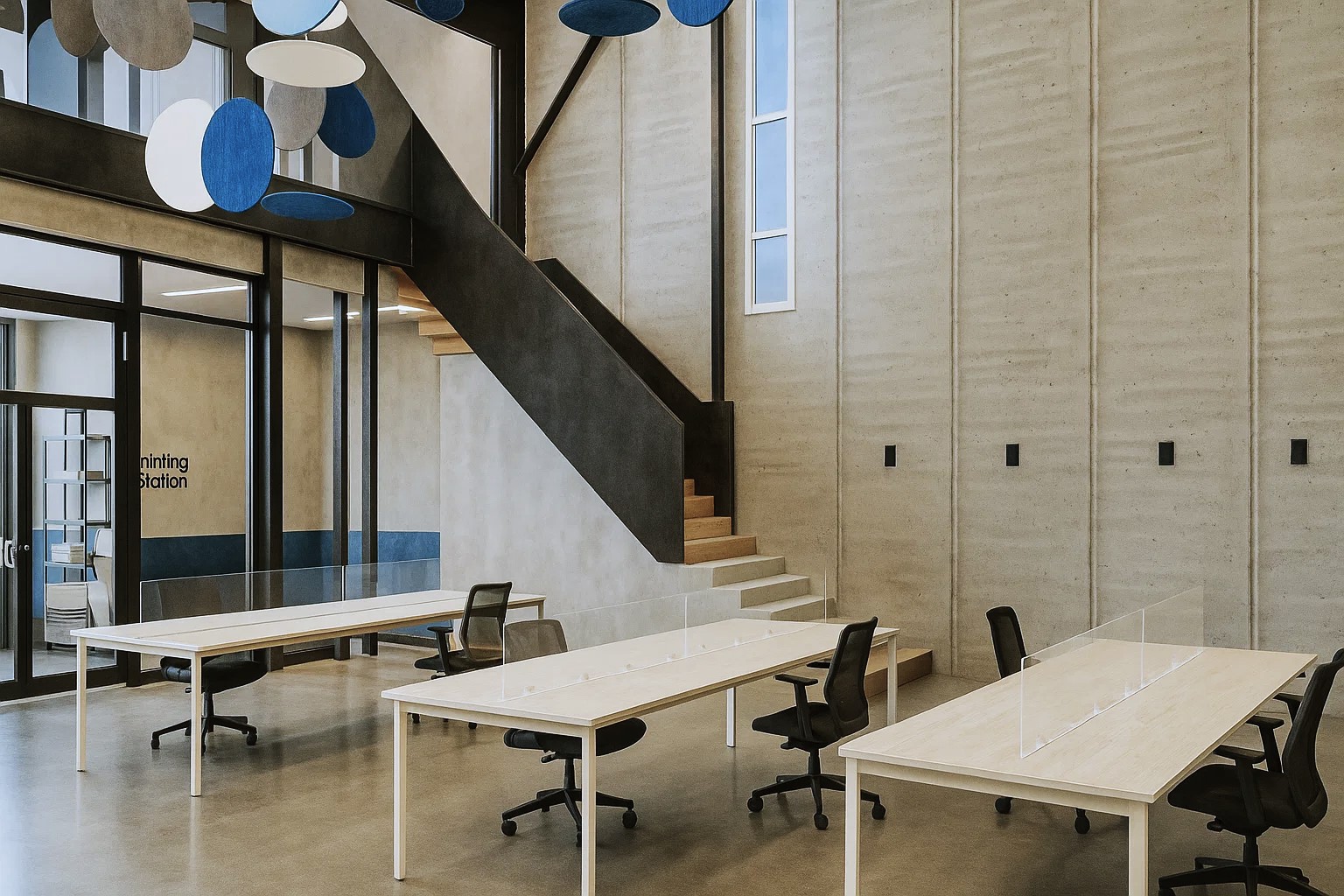
Our educational materials describe how workplace design concepts—such as structure, density, and pacing—may support teams in exploring sustainable rhythms. Deployed tools, if any, are agreed separately; this website is informational only.
Illustrative layouts show how spacing concepts could adjust as focus duration and break frequency change across a day.
Educational examples describe reducing visual density during busy periods—without relying on interruptive alerts.
Design principles explore how navigation and spacing may reflect how teams move through tasks.
Educational content explains how workplace signals could inform gradual layout adjustments in deployed systems—demos on this site are illustrative only.
Teams begin in a familiar environment with varied routines—no onboarding theater or course gates.
Rhythm, break spacing, and focus stability inform subtle structural changes across modules.
Teams may explore sustainable workplace habits when balanced defaults are maintained over time—outcomes vary by organisation.
Educational examples: prolonged focus may support clearer structure; irregular rhythm may suggest wider spacing; stable patterns may support efficiency. Results are not guaranteed.
Concept layouts may simplify peripheral elements during busy periods—lowering visual noise in educational examples.
Layout concepts may use wider module gaps when break intervals are irregular—supporting softer pacing through design, not medical advice.
During deep focus, related panels drift into aligned clusters—supporting continuity without explicit tools.
Transitions between work states use gradual motion so shifts feel continuous, not abrupt.
We deliberately avoid course structures, streaks, badges, checklists, and productivity-score aesthetics. Our educational content focuses on design principles, not deployed monitoring products on this website.
Rewards and competition are absent from our educational approach. We do not rank individuals.
Feedback is embedded in spacing, hierarchy, and motion—never push notifications or coaching nudges.
Design education explores how workspaces can make balanced choices easier than strained ones—without promising specific results.
We are a United Kingdom–based provider of informational workplace habit education and conceptual adaptive-system design for organisations.
We help teams understand how workplace structure, rhythm, and environmental design can support constructive routines—through education and system thinking, not medical treatment.
Enquiries are handled via our contact page. Program scope, pricing, and contracts are confirmed in separate written agreements.
Full UK contact details, Privacy Policy, Cookie Policy, and Terms of Use are published on every page.
Support employee education around constructive workplace routines through systemic design—aligned with operational reality, not abstract training modules.
Modular architecture scales across teams while preserving local rhythm adaptation.
We publish transparent privacy and cookie policies and aim for minimal data collection on this website.
Educational discussion of aggregate rhythm trends may inform workspace policy—without individual surveillance or performance scoring.
Connect with Youthrestore to explore how adaptive systems can support employee habit education inside real workflows.